
Anticancer 7-Day Diet Kickstart
Day 5: Fiber and Gut Health
Welcome to Day 5 of the Anticancer Lifestyle Program’s 7-Day Diet Kickstart! Today, we’re delving into the world of fiber and how it helps create a healthy gut microbiome. Get ready to optimize your digestive health and boost your overall well-being!
Here’s what’s on the menu for today:

REVIEW
Our microbiome consists of the trillions of organisms that live on us and in us, primarily bacteria, along with viruses and fungi. In fact, humans have 10-100X more microbial DNA than our own DNA! The largest number of these microbes are in our GI tract.
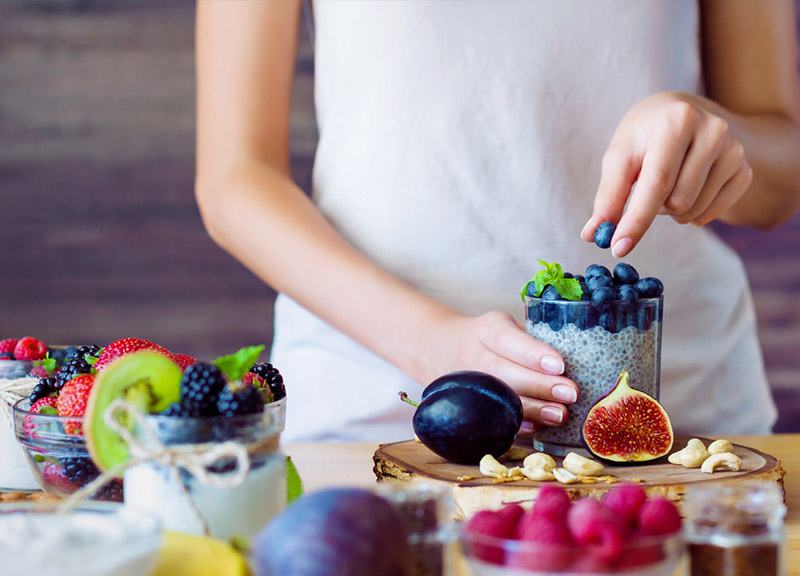
Everyone’s gut microbiome is different. We have a symbiotic relationship with the microbes in our gut. They help us digest and break down food and medications; defend us from pathogenic (“bad”) bacteria; break down fiber (which in turn feeds the “good” bacteria); and perform other essential functions. An unhealthy microbiome has been associated with many diseases and conditions, including obesity, diabetes, inflammatory bowel disease, cancer, eczema, allergies, asthma, and even depression (gut-brain interaction). Favorable gut bacteria decrease our risk of cancer.
Most of our microbiome is determined by the things we consume every day, such as the food we eat and the medications we take. A plant-based diet – full of nutrients, fiber, whole grains, legumes, vegetables, and fruits – along with the other healthy lifestyle behaviors taught in the Anticancer Lifestyle Program, are the key ways to achieve a healthy microbiome.
Ideal amount of fiber to consume each day:
Men
- Age 50 or Younger – 38 Grams
- Age 51 or Older – 30 Grams
Women
- Age 50 or Younger – 25 Grams
- Age 51 or Older – 21 Grams
To get adequate fiber, it’s ideal to consume 5-9 servings of vegetables and fruits per day, along with whole grains, nuts, seeds and beans.
Examples of good fiber sources:
Fruits
½ cup raspberries or blackberries= 4 grams; 1 medium apple = 4.5 grams; 1/2 cup passion fruit = 12 grams; 1 avocado = 9 grams
Whole Grains
1 cup cooked brown rice = 3.5 grams; 1 cup cooked quinoa = 5 grams; 1 slice whole wheat bread = 2 grams; ½ cup steel cut oatmeal = 2 grams
Vegetables
1 cup cooked green peas = 9 grams; 1 cup cooked broccoli = 5 grams; 1 cup acorn squash = 9 grams; 1 cooked potato, with skin = 4 grams; 2 cups raw kale = 2.6 grams
Other
1 oz. almonds = 3.5 grams; 1 oz. chia seeds = 10 grams; 1/4 cup sunflower seeds = 3 grams; 1 cup black beans = 15 grams; 1 cup cooked lentils = 15.5 grams; 1 cup cooked cannellini beans = 13 grams

REFLECT
 Reflect on how much fiber you consume today. Look up the fiber per serving size if it’s not indicated on the sheet.
As you’re monitoring your fiber intake, it can be helpful to keep in mind that the American Institute for Cancer Research (AICR) recommends at least 30 grams of fiber each day for cancer prevention.

IDENTIFY AND COMMIT
Consulting the list of some suggested fiber sources, identify at least two foods you can add to your diet to increase your fiber intake. Commit to adding an extra serving of fiber each day for the next week. Keep trying new fiber-rich foods to see which ones you like!
Check out our Diet Kickstart 7-Day Sample Menu for a full week of easy, delicious, and healthy recipe inspiration.
Nourish your body and cultivate a healthy gut microbiome. Your digestive system will thank you!
Note: If you missed Day 4: Ultra-processed Foods, you can complete it here.
Tomorrow we will explore Nontoxic Cookware and Food Storage, helping you create a safer, healthier kitchen environment. Remember to check your inbox!

Bonus
Increase Your Fiber Intake
Learn more about ways to increase your fiber intake, and get some fiber-rich recipes from this Physician’s Committee for Responsible Medicine tip sheet!