
 Melanya Kushla
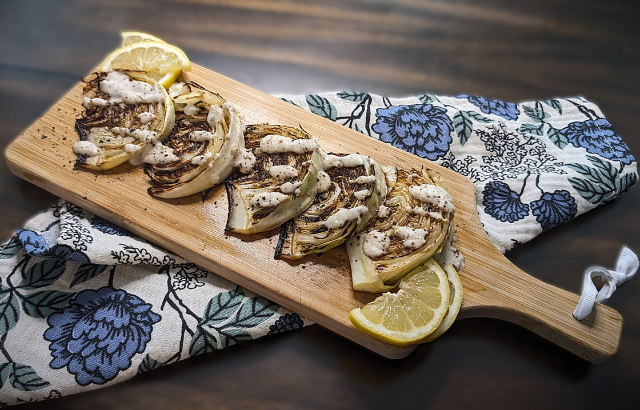
These Roasted Cabbage Caesar Wedges are a flavorful, nutrient-dense twist on a classic Caesar salad. Instead of romaine, the recipe features cabbage, a cruciferous vegetable rich in glucosinolates that may help protect cells from damage and support the body’s natural detoxification processes. The creamy white bean Caesar dressing adds plant-based protein and fiber to support gut health and satiety, while olive oil provides heart-healthy fats and garlic and lemon contribute antioxidants that help fight inflammation and oxidative stress. Parmesan and anchovy paste (optional!) bring bold, umami flavor with just a small amount, making the dish satisfying and balanced. This recipe is also incredibly versatile and can be served as a hearty side dish, a light lunch, or alongside grilled chicken or fish for a well-rounded meal.
Roasted Cabbage Caesar Wedges
Recipe By: Melanya Kushla, MS, RD, CHES at Taste & Thrive
Yield: 8 servings
Serving Size: 2 cabbage wedges
Ingredients
Salad:
- 1 small head red or green cabbage
- 2 Tablespoons olive oil
- 1 lemon, zested
- 1 teaspoon fresh ground black pepper
- Pinch of salt
Caesar Dressing:
- 1 cup white beans, cooked and drained
- ¼ cup olive oil
- Juice of 1 lemon (~ ¼ cup)
- ¼ cup parmesan cheese, fresh grated off the block
- ½ teaspoon fresh ground black pepper
- 1 teaspoon anchovy paste, white miso paste, reduced sodium soy sauce or worcestershire sauce
- 2 cloves garlic, minced
- 2-4 Tablespoons water (as needed)
Utensils
- Baking sheet
- Cutting board
- Chef knife
- Small bowl
- Small whisk
- Pastry brush
- Zester
- Reamer
- Measuring cups & spoons
- Food processor or blender
Directions
-
Preheat the oven to 400°F and line a large rimmed baking sheet with parchment paper. Set aside.
-
Take the head of cabbage and remove any wilted or damaged outer leaves.
-
Then, cut the cabbage in half through the center stem. Place each half cut-side-down and slice each half into 8 wedges (16 total), leaving the base attached to the stem to help the wedges stay together.
-
Arrange the wedges on your baking tray in a single layer.
-
In a small bowl, combine the oil, lemon zest, black pepper and salt and whisk together, then “paint” onto each wedge with the pastry brush. Alternatively, you may drizzle it over each wedge with a spoon.
-
Place in the oven and roast until tender and browned, about 40 minutes total, flipping them over to brown the other side halfway through.
-
Meanwhile, add all the ingredients for the Caesar Dressing to a food processor or blender and pulse for about 30 seconds, or until semi-smooth. Alternatively, you can mash the beans by hand with a fork, then manually blend by mixing thoroughly together in a medium mixing bowl.
-
When the cabbage has finished roasting, transfer it to a serving dish and drizzle or dollop the dressing on top of the wedges.
-
Garnish with some fresh black pepper and lemon wedges and enjoy!
Notes
- The leftovers can be stored in the refrigerator for up to seven days, the Caesar Dressing on its own can also be stored in the freezer for up to 6 months.
- This recipe is originally made with cannellini beans but any beige or white bean will work.
- Garnish with ¼ cup crushed, homemade croutons or toasted pine nuts to add a bit of crunch!
- Traditionally a Caesar dressing includes anchovy paste for a savory base flavor, however any savory, or umami, ingredient will be a reliable swap.
- Vegan parmesan can be substituted, if desired, to make this a completely plant-based recipe.
Nutrition Info (Per Serving)
170 calories – 13g fat – 1g sat fat – 14g carbohydrates – 5g protein – 4g fiber – 230mg sodium
Nutrient Highlights
- Cabbage: Rich in glucosinolates, which are converted into compounds that may help protect cells from DNA damage and reduce cancer risk. It is also high in vitamin C, fiber, and antioxidants that support immune function and help combat inflammation and oxidative stress.
- Beans: An excellent source of fiber, healthy fats and protein to help you feel fuller longer and more satisfied. The specific type of fiber in beans is associated with reduced risk of metabolic syndrome, insulin sensitivity and some GI cancers.
- Lemon: A great source of vitamin C, a powerful antioxidant that supports immune function, collagen production, and iron absorption. The polyphenol content may also have anti-inflammatory effects and support metabolic and digestive health.
- Anchovy Paste: Provides omega 3 fatty acids, which have anti-inflammatory properties that may help reduce cancer risk when included as part of an overall balanced diet. It is also a source of vitamin D and selenium, both nutrients that support immune function and cellular protection.
- Olive Oil: Rich in monounsaturated fats and powerful antioxidants like polyphenols and vitamin E, extra virgin olive oil helps reduce inflammation and oxidative stress, two key factors associated with cancer risk.
- Garlic: Contains an active compound, allicin, which has been shown to lower blood pressure and cholesterol levels. It has potent antibacterial and antiviral properties, helping to fight infections.