
 Melanya Kushla
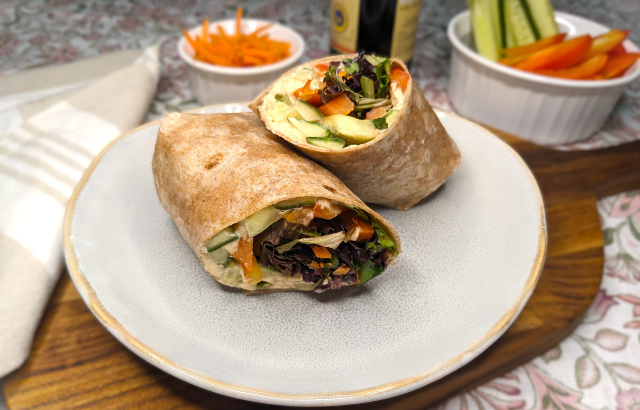
This Lemon Garlic Hummus & Veggie Wrap is a fiber-rich, plant-forward option that supports gut health, glucose metabolism, and may help reduce cancer risk. The hummus provides plant-based protein and fiber from chickpeas, while leafy greens, carrots and bell peppers deliver antioxidants like vitamin C and carotenoids that help combat oxidative stress. The whole wheat wraps add additional fiber for digestive health and satiety. The recipe is incredibly flavorful and easy to customize - swap in different vegetables, greens, or proteins to suit your taste, making it a versatile and nourishing choice for lunches, snacks, or to bring to a picnic.
Lemon Garlic Hummus & Veggie Wrap
Recipe By: Melanya Kushla, MS, RD, CHES at Taste & Thrive
Yield: 2 servings (2 wraps)
Serving Size: 1 whole wrap
Ingredients
Hummus:
- ¼ cup tahini (sesame paste)
- Juice & zest of 1 lemon
- 2 cloves garlic, peeled
- ½ teaspoon salt
- ¼ teaspoon fresh ground black pepper
- 2 Tablespoons extra virgin olive oil
- 2 cups chickpeas, cooked and drained
- 2-3 Tablespoons cold water, as needed to thin
Wrap:
- 2 whole wheat wraps, large
- ½ cup fresh-prepared hummus or your favorite store brand
- ½ of a red bell pepper, seeded and thinly sliced
- ½ cup shredded carrot (~1 whole carrot)
- ½ of an English cucumber, thinly sliced
- ½ cup fresh spinach or mixed salad greens
- ½ teaspoon freshly ground black pepper, divided
- ½ teaspoon balsamic vinegar
- 2 Tablespoons crumbled goat or feta cheese (optional)
Utensils
- Cutting board
- Chef knife
- Measuring cups and spoons
- Spoon or spatula
- Food processor or blender
Directions
For the Hummus:
-
Place the tahini, lemon juice and zest in the food processor and blend for about 1 minute, whipping the tahini up.
-
Scrape the sides and bottom of the bowl then process for 30 seconds more.
-
Next, add the garlic, salt, pepper, and olive oil to the processor.
-
Process again for 30 seconds, then scrape the sides of the bowl and process another 30 seconds.
-
Add half of the chickpeas and process for 1 minute.
-
Scrape the sides of the bowl and add the rest of the chickpeas and process for another 1-2 minutes.
-
If the hummus is a little too thick, slowly add 1 Tablespoon of cold water at a time, then process, until desired consistency is reached.
For the Wrap:
-
Lay out the tortillas on a clean, flat surface.
-
Divide the hummus between each wrap, spreading it out thin and leaving a ½-inch border around the edges.
-
Lay the bell pepper and cucumber slices on one half.
-
Add the spinach or greens and shredded carrots on top of the sliced pepper and cucumber.
-
Top with fresh ground black pepper and a drizzle of balsamic vinegar.
-
Roll up the wrap - starting from the “full” side of the tortilla, bring the edge around the filling and tuck it in on the other side, tightly; tuck both ends of the tortilla in, so the filling doesn’t fall out, then finish rolling it up. The hummus will act as a seal helping it stay together.
-
Slice in half at an angle and enjoy!
Notes
- This recipe can be made with prepared hummus, but a recipe is included if you wish to make your own!
- The long processing times are necessary to get the ideal texture and “whip” the hummus, making it smooth and creamy.
- The wrap needs to be eaten immediately, but the hummus itself will keep for up to 7 days in the refrigerator, or the freezer for up to 3 months.
Nutrition Info (Per Serving)
280 calories – 14g fat – 2g sat fat – 28g carbohydrates – 10g protein – 7g fiber – 230mg sodium
Nutrient Highlights
- Whole Wheat Wraps: High in fiber, which supports a healthy gut microbiome and may reduce the risk of colorectal cancer. They also contain antioxidants and phytonutrients that help combat inflammation and oxidative stress.
- Hummus: Rich in fiber and plant-based protein (chickpeas) that support gut health and may help reduce the risk of colorectal cancer. It also often includes garlic, lemon, and olive oil, ingredients that provide antioxidants and anti-inflammatory compounds that help protect cells from oxidative stress.
- Red Bell Pepper: Contains high amounts of antioxidants called carotenoids that help protect cells from oxidative damage. As the bell pepper ripens, there is an increase in the nutrient concentration, with orange and red having the highest.
- Carrot: High in beta-carotene, a powerful antioxidant that may protect cells from oxidative damage linked to cancer development.
- Cucumber: A rich source of cucurbitacins and antioxidants that help reduce inflammation and oxidative stress, two key factors linked to chronic disease and cancer development.
- Spinach: Rich in antioxidants such as vitamin C, beta carotene, and lutein, which help neutralize free radicals and protect cells from damage. Its high folate content also supports DNA repair and healthy cell division, both important in cancer prevention.
- Tahini: Made from sesame seeds, tahini is packed with lignans and phytosterols. These plant compounds have been studied for their potential role in hormone-related cancer prevention, particularly breast cancer, in addition to providing a good source of antioxidants.
- Garlic: Contains an active compound, allicin, which has been shown to lower blood pressure and cholesterol levels, reducing the risk of heart disease. It has potent antibacterial and antiviral properties, helping to fight infections.