
 The Anticancer Lifestyle Team
 Quick answer: Air fryers are generally safe, and air frying is a healthier way to cook than deep frying because it uses far less oil. The two things worth paying attention to are the appliance’s coating and the high heat itself. The good news is that a stainless steel model and a few simple cooking habits address both concerns.
What to know about nonstick coating
Most air fryers and countertop ovens, along with the racks and baskets that come with them, are lined with a non-stick material. Usually, that material is PTFE (polytetrafluoroethylene), a compound made from PFAS chemicals, often called “forever chemicals.” PFASs have been associated with a range of cancers and other health concerns, so it makes sense to try to avoid them.
Here is the reassuring part. While PTFE is made from PFAS chemicals, the body cannot absorb it, so any PTFE that flakes off is generally not absorbed and passes through the body.
A few real considerations remain:
- Trace amounts of PFASs can linger on the finished product from the manufacturing process.
- At around 500°F, PTFE starts to degrade and can release fumes. Most air fryers and countertop ovens stay below that threshold, which is one reason they are a safer bet than stovetop nonstick pans, where a heated pan can climb well past 500°F. Still, that ceiling sits closer to everyday cooking temperatures than many people realize.
The biggest concern of products with PTFE nonstick coating (e.g., Teflon), is the process used to make them. The PFAS chemicals used to produce PTFE must be manufactured somewhere, and that process often exacts a heavy toll on the surrounding community, exposing workers and contaminating local land, water, and air to carcinogenic chemicals. These products are also difficult to dispose of responsibly. Reducing consumer demand for Teflon and other PTFE-coated goods is important for both health and ecological reasons.
Below is what to look for in an air fryer, the safest brands to consider, and how to air fry in a way that supports an anticancer lifestyle.
What is the safest air fryer material?
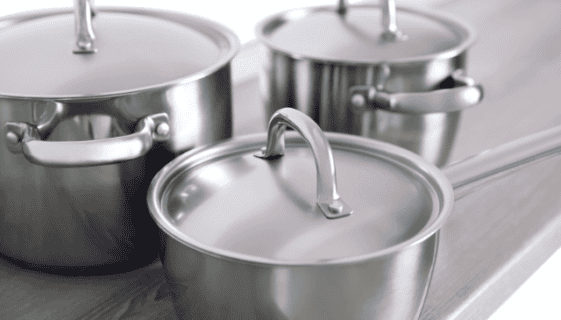
Full stainless steel is the safest choice, inside and out, including any accessories that come with the unit.
One thing to watch for: some products advertise “stainless steel” but mean only the exterior shell, with a non-stick interior. Complete stainless steel is what you are after, and it is still preferable to a “ceramic coating”. “Ceramic” or silicone coating is a consumer’s guessing game because the simple ingredient of silicon is processed with a lot of additives including titanium dioxide, binders, colorants, and siloxanes (linked to endocrine disruption) which companies will never fully disclose. Lab tests have been positive for various heavy metals like lead and mercury, while other research shows possible leaching of siloxanes, which are far from benign. However, if a fully stainless interior is not available for the model you want, a ceramic-coated basket is a reasonable second choice.
Best nontoxic air fryer brands
These three models, recommended by ACLP green-living expert Deborah deMoulpied, are good starting points for a safer air fryer:
| Air Fryer | Why it makes the list |
|---|---|
| Hysapientia Air Fryer Oven | Oven-style air fryer favored for its stainless steel construction. |
| Emeril Lagasse Air Fryer 360 | A stainless steel countertop oven and air fryer in one. |
| Cosori Iconic Stainless Steel 6.5-Quart Smart Air Fryer | Stainless steel body. Note that the basket is ceramic-coated rather than fully stainless. |
For a fuller list of vetted kitchen products, including pots, pans, utensils, and storage, see ACLP’s free Guide to Best Nontoxic Cookware and Kitchen Brands.
How to Air Fry More Safely
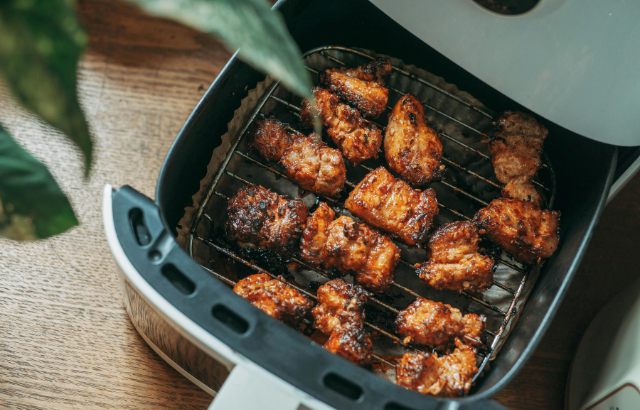
From a nutrition standpoint, air frying is a clear step up from deep frying. You take in far less fat and fewer calories, and you reduce the harmful compounds that come with submerging food in hot oil. The catch is that air frying is still a high-heat cooking method, and high heat creates its own byproducts regardless of how little oil you use.
High-heat cooking, including air frying, can produce two kinds of compounds worth knowing about:
- Acrylamide forms in starchy plant foods, such as potatoes and bread, when they are browned, toasted, or charred at high temperatures. Acrylamide is classified as a probable human carcinogen.
- HCAs and PAHs (heterocyclic amines and polycyclic aromatic hydrocarbons) form when meat and fish are cooked at high heat, especially when the surface chars or burns. These chemicals damage DNA and are linked to an increased risk of cancer.
This does not mean you need to retire your air fryer! Air frying still produces fewer of these compounds than deep frying. It means a few small habits go a long way toward cooking with them safely.
These simple adjustments reduce harmful compounds while keeping your food flavorful:
- Marinate before cooking. Marinating meat with antioxidant-rich ingredients such as turmeric, garlic, lemon, herbs, and spices has been shown to reduce the formation of carcinogens during high-heat cooking. It also makes the food taste better.
- Select lower temperatures. Setting your air fryer to around 350°F or lower, when the recipe allows, reduces the compounds that form at higher temperatures.
- Aim for golden, not charred. The darkest, crispiest, burnt edges are where these compounds are more concentrated, so cook to golden brown and stop there.
- Go easy on potatoes. Starchy foods like potatoes and fries form the most acrylamide. Soaking cut potatoes in water for 15 to 30 minutes before cooking, then air-frying to a light golden color rather than deep brown, helps keep acrylamide levels lower.
- Clean the fryer regularly. Old food residue and burnt crumbs can get reheated each time, releasing residual byproducts onto fresh food.
- Use a heat-stable oil. If you are adding oil, choose one that withstands high temperatures, such as avocado oil.
The bottom line
Relative to deep frying, air fryers are a genuinely useful tool for cooking with less fat and fewer nutritional concerns. To get the most out of yours, choose a full stainless steel model when you can, keep cooking temperatures moderate, season generously with antioxidant-rich herbs and spices, and aim for golden rather than charred. These are small, doable changes that let you enjoy a crispy, nutrient-dense, anticancer-aligned meal with confidence.
If your current air fryer has a PTFE non-stick coating, it is generally safe to keep using it as long as the coating is intact and you stay within its temperature range. Consider replacing it if the coating is scratched, flaking, or peeling, since a damaged surface is more likely to shed microparticles with unknown consequences. However, we do know that micro and nanoparticles from pollution and plastic induce inflammation, which can lead to multiple health consequences, including cancer. This is true for all non-stick coated products including Teflon, PTFE, and ceramic-coated (silicone). When you are ready to upgrade, a fully stainless steel model is the safest choice as stainless steel is non-reactive and does not shed harmful particles.
FAQs: lightning round
Are air fryers toxic? Air fryers are generally safe to use. To minimize health concerns, choose one that is made completely of stainless steel. If yours is nonstick, it is important to keep cooking temperatures below 500°F (260°C) to minimize the production of harmful chemicals.
What is the safest air fryer to buy? Purchase one that is made completely from stainless steel. If not available, a ceramic-coated basket is a reasonable second choice. Our recommended brands are: Hysapientia Air Fryer Oven, Emeril Lagasse Air Fryer 360, and Cosori Iconic Stainless Steel 6.5-Quart Smart Air Fryer
Do I need to replace my non-stick air fryer? Not necessarily. If your current air fryer has a PTFE non-stick coating, it is generally safe to keep using as long as the coating is intact and you stay within its temperature range. Consider replacing it if the coating is scratched, flaking, or peeling, since a damaged surface is more likely to shed. When you are ready to upgrade, a fully stainless steel model is the safest choice.
Does air frying cause cancer? Air frying itself is not considered a major cancer risk, and it produces fewer harmful compounds than deep frying. Like any high-heat method, it can create harmful compounds in food,, especially when food is charred. Cooking at lower temperatures, marinating with herbs and spices, and avoiding burnt edges keep these compounds low.
Is air frying healthier than deep frying? Yes. Air frying uses far less oil, which means less fat and fewer calories, and it generates fewer of the harmful compounds associated with deep frying.
What is the best oil to use in an air fryer? Choose an oil that tolerates high heat, such as avocado oil, and use it sparingly.
Try these ACLP air fryer recipes
Once you have your air fryer set up and ready to go, these ACLP recipes all include air fryer instructions:
- Zucchini Pizza Bites
- Coconut Crusted Fish, Chicken, or Tofu
- Potato and Zucchini Latkes
- Crispy Cauliflower Steaks with Tahini Sauce
- Tofu or Chicken Shawarma
Explore more from the Anticancer Lifestyle Program
- Guide to Best Nontoxic Cookware and Kitchen Brands
- The Non-Toxic Home: A Room-by-Room Guide
- Free eBooks library
- Free online course: improve your diet, fitness, mindset, and home environment
About the contributors
Deborah deMoulpied, M.Ed., is a green-living expert who created the Environment pillar of the Anticancer Lifestyle Program. She founded an environmental green-goods store in New Hampshire, where she spent years researching and vetting the cleanest, safest consumer products, and she is a frequent guest lecturer for cancer support groups and organizations promoting a less toxic lifestyle.
Crystal Pace, RDN, Crystal is a Registered Dietitian Nutritionist (RDN) and health coach who is passionate about Anticancer living. After graduating with her B.S. degree in nutrition from the University of New Hampshire, Crystal went on to pursue her M.S. degree in nutrition from New York University. Crystal is passionate about taking a holistic approach to help individuals reconnect to the pleasure and satisfaction of eating while nourishing a healthy relationship with food and their body.
Sources
- Yale Sustainability, “Yale Experts Explain PFAS ‘Forever Chemicals'”
- Consumer Reports, “You Can’t Always Trust Claims on ‘Non-Toxic’ Cookware”
- German Federal Institute for Risk Assessment (BfR), FAQ on PTFE non-stick cookware
- Poison Control, “Do Air Fryers Cause Cancer?”
- Food Packaging Forum, Nanoparticles released by quasi-ceramic pans
- PubMed, Toxicokinetic Profiles and Potential Endocrine Disruption Effects at the Reproductive Level Promoted by Siloxanes Used in Consumer Products
- Lead Safe Mama, Caraway “cookware without the chemicals” positive for 20 metals, including Lead, Mercury, Cobalt & Antimony (tested with XRF technology)
- NonToxicLab, Is Silicone Safe for Cooking? What Research Shows
- The Guardian, Toxic truth? The cookware craze redefining ‘ceramic’ and ‘nontoxic’
- Cells, Molecular and Cellular Effects of Microplastics and Nanoplastics: Focus on Inflammation and Senescence
- Journal of Hazardous Materials, Polytetrafluoroethylene (PTFE, Teflon) microplastics and nanoplastics induce oxidative stress, mitochondrial damage, and genotoxicity in human intestinal cells
- Science of the Total Environment, Raman imaging for the identification of Teflon microplastics and nanoplastics released from non-stick cookware
- Journal of Hazardous Materials, Raman-guided exploration of placental microplastic exposure: Unraveling the polymeric tapestry and assessing developmental implications