
 Deborah deMoulpied
 Is it time to start using an air purifier? The short answer is … yes!
When the Anticancer Lifestyle Program was launched more than 15 years ago, the Five Environment Keys focused on simple, practical steps to reduce toxic exposures in the home. The second Key—“Keep Your Air Clean”—offered practical strategies for improving indoor air quality, the kind of evidence-based guidance the Anticancer Lifestyle Program has always provided. Among the many options suggested was the use of an air purifier.
Times are different now. Fires around the world have escalated in number and intensity. Globally, five of the last six years have featured the worst fires in recorded history. When the skies are thick with an orange haze, the sun is but a glow-ball in the air, and the smell of smoke is obvious, things are not good. Although you can see the smoke, the greatest harm comes from the particles you cannot see. They penetrate deep into the lungs, causing myriad health issues. Combine this with the fact that global pollution is increasing, resulting in millions of deaths. Yes, it’s time to use an air purifier.
Since most people spend about 90% of their time indoors, indoor air quality matters. It’s been known for a long time that the air in our homes is typically more polluted than the outdoor air. Many chemicals, such as fragrances, PFAS, and stain repellents, can contribute to poor indoor air quality. But harmful outdoor air is a growing menace; it doesn’t stay outdoors. Forest fire smoke doesn’t obey city limits and it is not confined to industrial zones. It harms city- and country-dwellers alike. The very young and the elderly are much more susceptible to poor-quality air.
The benefits of air purifiers
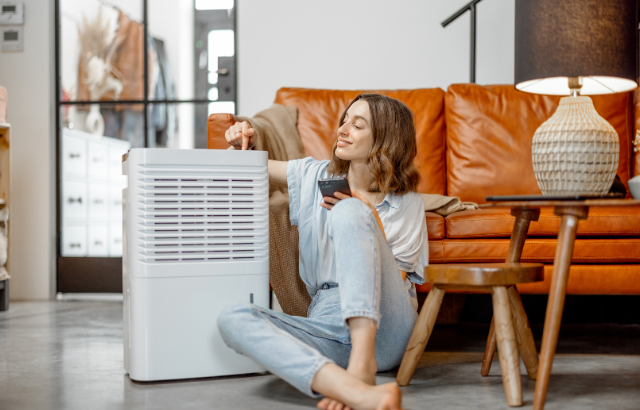
To improve indoor air, stand-alone air purifiers — sometimes called air cleaners — are ideal for smaller rooms, such as bedrooms or sitting areas, where limited air volume enables the air to be cleaned quickly. Additionally, it’s important to maintain other home HVAC (Heating, Ventilating and Air Conditioning) systems, including changing or cleaning filters. If you are in a humid climate, a dehumidifier should also be used, as an air purifier is not built to remove moisture.
What does an air purifier do anyway?
A high-quality 3-stage filter is meant to capture 99.97% of airborne particles. A typical 3- stage filtration system consists of:
- A pre-filter, which removes larger particles like pet dander
- The main HEPA filter (High Efficiency Particulate Air), which filters extremely small particles, including smoke, down to 0.3 microns (i.e., smaller than bacteria)
- An activated charcoal or carbon filter, which captures odors, chemicals, and VOCs (volatile organic compounds).
Things to consider when buying an air purifier
1 – Look for the AHAM Verified Seal. This indicates the product has been independently tested by the Association of Home Appliance Manufacturers. It guarantees that the advertised Clean Air Delivery Rate (CADR) is accurate.
2 – Look for higher CADR numbers. These numbers indicate the volume of filtered air by the air purifier. The larger the room, the higher the CADR needs to be. Make sure it matches your room size. Dimensions of recommended room size in square feet should be listed on the product.
3 – Look for additional features. These added features may, for example, offer a night/sleep mode, which dims lights at night; a useful “time to change filter” light; a quiet mode, and so forth.
Where you place the device matters. The most important room is your bedroom, as you spend about one-third of your life there. That’s a lot of breathing! If you work from home, place it near you while you work to ensure cleaner air in your immediate environment. You may need several air purifiers depending on the number of bedrooms or the size of your home.
Best air purifier brands
There are many good-quality air purifiers on the market. It’s not rocket science. Here are some that have proven themselves over the years and that come highly rated:
| Air Purifier | Why it makes the list |
|---|---|
| Airmega Mighty AP-1512HH | Although a bit pricier, it has a long-standing reputation for high quality. |
| Blueair | Large variety of options for large and small rooms and some specific to smoke and wildfires. |
| Levoit Core® 300-P Air Purifier | Comes in a variety of sizes, but this popular model is reasonably priced for smaller room. |
If you are in a desperate situation, DIY air cleaners or box fans actually work pretty well. They are even recommended by the EPA.
When to use an air purifier
Check the air quality in your area to know whether it is a good time to use the purifier. When the air quality is no longer green, it’s time to turn on your air purifier. You can also follow where fires are in real time to stay ahead of the smoke. If there is an air quality emergency in your area, it’s a good idea to wear a mask if you go outside. An N95 or KN95 mask can filter 95-99% of smoke particles, whereas a surgical mask will not. After the smoke has settled, do a good cleaning, dusting, and vacuuming (ideally with a HEPA-filter vacuum) so the settled dust does not become airborne again.
Long-term exposure to air pollution significantly increases both the risk of developing cancer and the likelihood of dying from the disease, according to a recent report by the Union for International Cancer Control.
Yes, it’s time to use an air purifier.
FAQs
Do air purifiers actually reduce cancer risk?
Yes. Long-term air pollution exposure raises both cancer risk and cancer mortality, and fine particles are a big part of why. A purifier lowers the particle load in the rooms where you spend the most hours, which is the exposure you have the most control over.
Do air purifiers help with wildfire smoke?
This is what they’re best at. Smoke is mostly fine particulate matter (PM2.5), exactly what a true HEPA filter is designed to trap. Run it with windows closed while smoke is in the area.
Are ozone generators or ionizers a good option?
No. Devices marketed as “ozone air purifiers” produce a lung irritant, and the EPA has long cautioned that they aren’t effective at safe levels. Stick with mechanical HEPA filtration.
How often should I change the filter?
HEPA filters generally need replacing every 6 to 12 months. But it is best to follow the manufacturer’s suggestions, or when the “change-light” goes on. A clogged filter quietly stops working, so the change-reminder light is worth having.
Should I run my air purifier all the time?
Mostly yes. Air recirculates constantly, so running it continuously on a low or sleep setting works better than short bursts. Bump it up when air quality drops or you’re cooking. People with lung conditions such as COPD, asthma, emphysema, allergies and lung cancer should consider using air purifiers continuously.
Will an air purifier help with mold or musty smells?
Only partly. A charcoal or carbon filter reduces odors, and HEPA catches spores in the air, but neither reduces the moisture that promotes mold growth. That takes a dehumidifier or repairing the source.
Do I need one in every room?
No, but placement matters more than quantity. Prioritize the bedroom first, then wherever you spend your waking hours. A single unit sized correctly for one room beats several underpowered ones scattered around.