
 Melanya Kushla
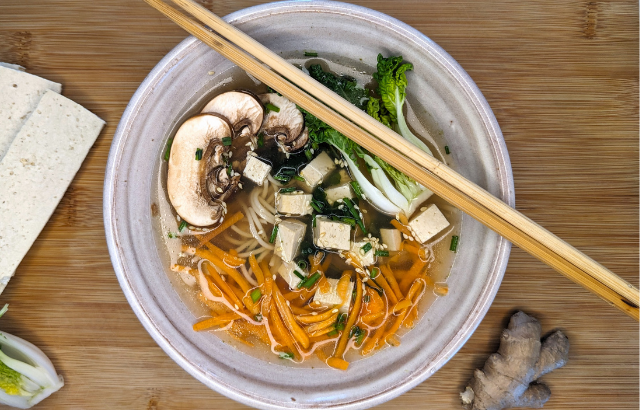
This comforting Ginger Miso Soup brings together ingredients that do more than just taste good. Shiitake mushrooms provide beta-glucans that support immune health, while bok choy delivers cruciferous compounds shown to improve cellular protection and detoxification pathways. Ginger adds gentle anti-inflammatory support and aids digestion. Fermented miso contributes beneficial compounds that support a healthy gut microbiome, or our gut bacteria, which are important players in overall immune function and cancer-prevention. Paired with plant-based protein from tofu and plenty of fiber-rich vegetables, this soup is both nourishing and satisfying.
Ginger Miso Soup with Shiitake & Bok Choy
Recipe By: Melanya Kushla, MS, RD, CHES at Taste & Thrive
Yield: 4 servings
Serving Size: ~2 cups
Ingredients
-
1 low-sodium vegetable bouillon cube (Recommend Rapunzel, Marigold, or Herb-Ox Brand)
-
6 cups water
-
1 Tablespoon reduced-sodium soy sauce
-
2-inch knob of fresh ginger root
-
3 Tablespoons white Miso paste
-
½ cup shredded carrots
-
½ cup sliced shiitake mushrooms
-
4 scallions, white parts separated from the green, both thinly sliced
-
2 heads of baby bok choy, quartered and rinsed
-
8 ounces of extra-firm tofu, diced
-
4 ounces brown rice noodles, or soba (buckwheat) noodles, dry
-
1 teaspoon toasted sesame seeds or sesame oil
Utensils
-
Medium pot
-
Whisk
-
Small spoon
-
Mixing spoon
-
Cutting board
-
Chef's knife
-
Small bowl
-
Measuring spoons & cups
Directions
-
Place a medium pot on the stove over high heat and add 2 cups of water, along with the vegetable bouillon cube (or an equivalent amount if using a powder).
-
Allow the water to come to a simmer and begin whisking to dissolve the bouillon cube.
-
Once completely dissolved, add the remaining water and soy sauce, and allow the mixture to come to a gentle boil. Then, reduce the heat to medium-low and maintain a simmer.
-
Take the 2” knob of ginger and, using the edge of the small spoon, scrape the outer layer of skin off. Once peeled, add to the pot of simmering broth.
-
In a small bowl, combine the miso paste with a few large spoonfuls of broth from the pot. Whisk to combine, then add back into the pot and mix in with the broth.
-
Continue to simmer while you add the carrots, mushrooms, the white half of the scallion (reserve the green portion for garnish), and the bok choy. Allow to simmer for ~10 more minutes.
-
Add the tofu and noodles last, allowing 5 more minutes to simmer before removing from the heat.
-
Ladle into bowls and top with the reserved diced scallion and sesame seeds or oil. Enjoy!
Notes
-
The ginger remains whole in the broth to add flavor without becoming overpowering - it can be removed when cooking is finished or left in for a stronger flavor development.
-
If you cannot find a low-sodium vegetable bouillon cube, 1 quart of unsalted vegetable stock may be used in its place, but be sure to only add 2 cups of additional water.
-
White miso paste can be found at many grocery stores in the Asian section, where you would find the soy sauce, or in a refrigerated section where you would find tofu.
-
This soup is best served fresh, but can be stored in the refrigerator for up to 5 days or in the freezer for 6 months.
-
With brown rice or buckwheat noodles, this recipe is both vegan and gluten-free! (Please note that some brands of soy sauce do contain gluten - ensure the sauce you choose is gluten-free if this is a priority).
Nutrition Info (Per Serving)
285 calories – 7g fat – 1g sat fat – 41g carbohydrates –16g protein – 5g fiber – 680 mg sodium
Nutrient Highlights
-
Ginger: Contains bioactive compounds like gingerol that have anti-inflammatory and antioxidant properties. It may also help reduce nausea, support digestion, and lower markers of oxidative stress.
-
Miso: A fermented soybean paste that contains bioactive compounds and beneficial microbes, both of which may support gut health and immune function, key factors in cancer risk reduction.
-
Carrots: Rich in beta-carotene, an antioxidant that the body converts to vitamin A, supporting immune function and eye health.
-
Shiitake Mushrooms: Rich in beta-glucans that support immune function and may enhance the body’s natural defense mechanisms against abnormal cell growth.
-
Scallion (Green Onion): Rich in organosulfur compounds and quercetin, both of which have been shown to support detoxification and may help lower the risk of gastrointestinal cancers.
-
Cruciferous Vegetables (Cabbage, Kale, Bok Choy): Rich in fiber, vitamins C and K, and compounds like sulforaphane, which may help reduce inflammation and protect against certain cancers. Regular consumption of these vegetables is linked to improved detoxification processes, such as lower inflammation and an overall lower chronic disease risk.
-
Tofu: Considered a complete plant-based protein, containing sufficient amounts of all essential amino acids, with anti-inflammatory compounds and beneficial isoflavones that can protect the heart, improve insulin sensitivity, and reduce the risk of breast, digestive system, and prostate cancers.
-
Brown Rice or Buckwheat Noodles: Excellent sources of complex carbohydrates and fiber that support digestive health and help regulate blood sugar. Buckwheat, in particular, contains rutin and other polyphenols with antioxidant properties that may help protect cells from oxidative stress.
-
Sesame Seeds: Packed with lignans and phytosterols, these plant compounds have been studied for their potential role in hormone-related cancer prevention, particularly breast cancer, in addition to providing a good source of antioxidants.