
 Ananda Kaplan
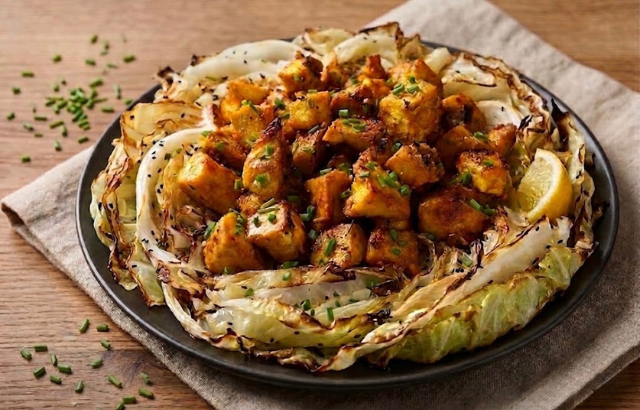
Lemon Miso Sheet Pan Tofu with Roasted Cabbage
Recipe By: Ananda Kaplan
Serves: 4
With under 25 minutes of hands-on prep, this recipe delivers big flavor with minimal effort. Both the tofu and cabbage roast at the same temperature for the same amount of time, so dinner comes together without the usual juggling act. Rich in plant-based protein, gut-supporting miso, and a powerful lineup of anti-inflammatory ingredients from the cabbage, lemon, ginger, and garlic, this dish is as good for you as it is satisfying.
Along the way you will also pick up a new tofu technique: tearing instead of cutting. Pressing the tofu well and then tearing it by hand into rough, uneven chunks creates jagged edges that get incredibly crispy in the oven in a way that neat cubes simply can't. It sounds like a small thing but it makes a real difference on the plate. The lemon miso glaze with its vibrant umami flavors is worth making by the jar — it works beautifully with fish, chicken, and vegetables. And if you want to change things up, swap the cabbage for broccolini, fennel, Brussels sprouts, or whatever is looking good at the market (roasting times for each are included). Once you make this once, you'll find yourself coming back to it again and again.
Ingredients
For the Tofu:
- 2 blocks (12-14 oz each) extra-firm tofu, pressed and torn
- 2-3 tablespoons neutral oil
- ½ teaspoons salt
- ¼ teaspoon each black pepper and turmeric
For the Lemon Miso Glaze:
- ¼ cup white or yellow miso
- 2 tablespoons warm water, to loosen
- Zest of 2 lemons
- Juice of 1 ½ lemons (save the other half to garnish)
- 1 tablespoon oil
- 1 tablespoon maple syrup or honey
- 2 garlic cloves, finely grated or ½ teaspoon garlic powder
- 1 2-inch piece fresh ginger, finely grated or ½ teaspoon ginger powder
For the Cabbage:
- 1 small head green cabbage or ½ head of a large green cabbage, cut into 8 ~1-inch wedges, core intact
- 2 tablespoons oil
- Salt
- Sesame seeds (to finish)
To Finish:
- Chives, minced
- 4 fresh lemon wedges from other ½ of lemon
- Pinch of chili flakes (optional)
Directions
-
Press the tofu: Remove the tofu from its packaging and drain. Wrap each block in a clean kitchen towel or several layers of paper towels, set on a cutting board, and place something heavy on top — a cast iron pan or a few heavy books work well. Press for 20–30 minutes until firm and dry. Remove from towels and pat dry.
-
Preheat, prep and make the glaze: Preheat the oven to 425°F and line two sheet pans with parchment. Whisk together all of the glaze ingredients and set aside.
-
Prep the cabbage: Remove any damaged outer leaves and cut the cabbage in half through the core. If using a small cabbage, cut each half into 4 wedges. If using a large cabbage, cut one half into 8 wedges (save the other half for another use). Keep the core intact so they hold together during roasting. Place on the second sheet pan, rub both sides with oil, and season with salt.
-
Tear and season: Tear the pressed tofu into rough, uneven chunks about the size of a ping pong ball — the more irregular the better. Place on one sheet pan, toss with oil, salt, pepper, and turmeric, and spread in a single layer with plenty of space between pieces.
-
Roast: Place both pans in the oven and roast for 25 minutes, tossing the tofu halfway through, until golden and starting to crisp.
-
Glaze and return to the oven: Pull the tofu pan out, pour the glaze over the pieces, and toss with a spatula until every piece is well coated. Flip the cabbage wedges. Return both pans to the oven for another 10 minutes until the glaze is deeply caramelized and sticky and the cabbage is crisped. Total cooking time is about 35 minutes.
-
Finish and serve: Serve the tofu and cabbage over your preferred grain such as white rice, brown rice, millet, or quinoa (recipes below). Sprinkle sesame seeds over the cabbage and finish with fresh chives, a squeeze of lemon, and chili flakes if you like.
Optional Grains and Vegetables
White Rice:
- 1 cup rice, rinsed
- 1 ½ cups water or vegetable broth
- ½ teaspoon salt
- 1 tablespoon olive oil or butter
Cook the rice while everything roasts, combine the rinsed rice, water or broth, salt, and butter or oil in a saucepan. Bring to a boil, then reduce heat to low, cover, and simmer for 20 minutes until the liquid is absorbed. Remove from heat, let sit covered for 5 minutes, then fluff with a fork.
Brown Rice:
- 1 cup brown rice, rinsed
- 6-8 cups water
- ½ teaspoon salt
- 1 tablespoon olive oil or butter
Bring the water to a boil in a large pot. Add the rinsed rice to the boiling water and stir once to ensure grains separate. Boil uncovered for 30 minutes until rice is tender. Drain into a strainer and shake rice to remove excess water. Return rice to the pot off of the heat and cover, this will allow the rice to steam. Uncover after 10 minutes, add the salt and oil or butter and fluff with a fork.
Millet:
- 1 cup millet, rinsed
- 2 cups water or vegetable broth
- ½ teaspoon salt
- 1 tablespoon olive oil or butter
Cook the millet while everything roasts, combine the rinsed millet, water or broth, salt, and butter or oil in a saucepan. Bring to a boil, then reduce heat to low, cover, and simmer for 18–20 minutes until the liquid is absorbed. Remove from heat, let sit covered for 5 minutes, then fluff with a fork.
Quinoa:
- 1 cup quinoa
- 6-8 cups water
- ½ teaspoon salt
- 1 tablespoon olive oil or butter
Bring the water to a boil in a large pot. Add the quinoa to the boiling water and cook for 14-15 minutes. Drain into a strainer and shake to remove excess water. Lay quinoa out on paper towels to dry and it will become fluffy. Once dry, mix quinoa with salt and oil or butter.
Vegetables:
These vegetable also work well with this dish. Below are their roasting times at 425°F:
- Broccolini or broccoli florets — 20–22 minutes, the florets get crispy and almost nutty
- Cauliflower florets — 25 minutes, caramelizes wonderfully with the miso flavors
- Brussels sprouts (halved, cut-side down) — 22–25 minutes, deeply savory and crispy
- Fennel wedges — 25 minutes, turns silky and sweet, beautiful with lemon
- Snap peas or green beans — 10 minutes, they go fast
- Asparagus — 12 minutes, bright and tender
Nutrient Highlights
-
Miso: Contains fermented soy, which provides beneficial probiotics and compounds like isoflavones that may have protective effects against hormone-related cancers. Its fermentation process may also support gut health.
-
Lemon: A great source of vitamin C, a powerful antioxidant that supports immune function, collagen production, and iron absorption. Their polyphenol content may also have anti-inflammatory effects and support metabolic and digestive health.
-
Garlic: Highly aromatic and a potent source of antioxidants and other protective compounds. Also supports a healthy digestive and immune system due to its antimicrobial and anti-inflammatory properties.
-
Ginger: Contains bioactive compounds such as gingerols and shogaols that have antioxidant and anti-inflammatory effects. Research suggests these compounds may help reduce oxidative damage, support immune function, and interfere with pathways involved in cancer cell growth.
- Tofu: Considered a complete plant-based protein, containing sufficient amounts of all essential amino acids, with anti-inflammatory compounds and beneficial isoflavones that can protect the heart and improve insulin sensitivity.