
 Crystal Cascio
 Potatoes have received a bad reputation largely because of diet culture. Diet culture is a system of beliefs that promotes rigid food rules and spreads inaccurate ideas about “good” and “bad” foods. Unfortunately, diet culture has demonized potatoes—especially white potatoes.
We’re here to clear up the confusion, share the nutrition facts about potatoes, and hopefully remind you that they are, in fact, full of nourishment (yes, all kinds of potatoes, including white potatoes!). It’s time to take back the tater from diet culture.
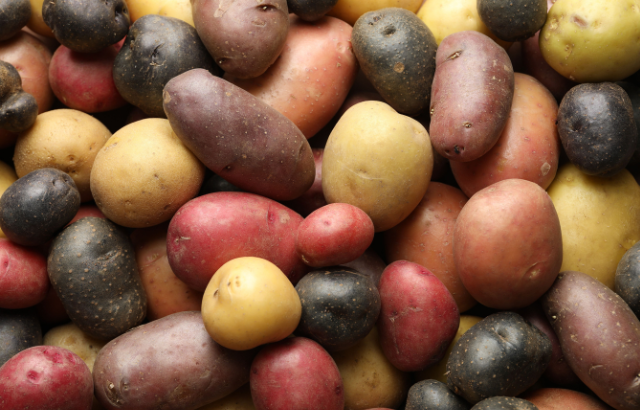
Throughout the world, potatoes rank alongside wheat and rice as one of the most important staple foods in human diets. Potatoes are a starchy vegetable and come in a wide range of colors, including red, orange, yellow, and purple. They provide essential nutrients that support overall health, including:
-
Complex carbohydrates
Provide energy to fuel our brains and muscles. -
B vitamins
Support cell health, the nervous and cardiovascular systems, and help the body produce energy from food. -
Vitamin C
Supports immune health, skin health, and iron absorption. Just ½ cup of potatoes provides more than 20% of daily vitamin C needs, making potatoes an excellent source. -
Fiber
Supports digestion, gut microbiome health, heart health, and feelings of fullness and satisfaction—an important component of an anticancer diet. Many Americans don’t consume enough fiber, and potatoes can help fill that gap. -
Potassium
Essential for blood pressure regulation, muscle contraction, and heart function. A baked potato contains about twice as much potassium as a banana. A medium potato with skin provides ~720 mg of potassium—more than a medium stalk of broccoli. -
Iron
Important for red blood cell production and muscle function. Potatoes contain iron, particularly in the skin, and their vitamin C content helps improve iron absorption. -
Phytochemicals
Naturally occurring plant compounds with antioxidant, anti-inflammatory, and anticancer properties. Colorful potatoes (such as purple and orange varieties) tend to contain higher levels of these compounds.
What about different types of potatoes?
You may be wondering whether white potatoes are less nutritious than orange-fleshed sweet potatoes or purple potatoes. While it’s true that colorful potatoes contain higher amounts of certain phytonutrients—such as beta-carotene in sweet potatoes and anthocyanins in purple potatoes—this does not make white potatoes “bad.”
White potatoes remain nutrient-dense and health-supportive. For optimal benefit, aim to enjoy a variety of potato types, prioritizing colorful varieties when possible, but without excluding white potatoes altogether.
Are potatoes “fattening”?
Another common myth is that potatoes cause weight gain. A potato about the size of a computer mouse (5⅓ oz) contains roughly 100 calories. A medium potato has about 147 calories.
What often increases calorie intake is not the potato itself, but the preparation method or toppings—such as deep frying or heavy additions of butter, cream, or cheese. For example, an order of fast-food French fries can contain upwards of 480 calories, largely due to added fats.
How to Enjoy Potatoes: Practical Tips
-
Eat potatoes with the skin on whenever possible to maximize fiber, potassium, iron, B vitamins, and phytonutrients.
-
If peeling potatoes, peel them thinly—the highest concentration of nutrients lies in and just beneath the skin (the cambium layer).
-
When boiling potatoes, use as little water as possible and keep the lid on to reduce nutrient loss.
-
Store potatoes in a cool, dark, dry, well-ventilated place. Avoid washing them before storage, as moisture speeds spoilage.
-
Do not store raw potatoes in the refrigerator—cold temperatures can convert starch to sugar, affecting flavor and browning.
-
Potatoes that sprout are still safe to eat; simply remove and discard the sprouts.
- Avoid eating any parts of a potato that have turned green. Green patches indicate the presence of solanine, a naturally occurring compound that can cause digestive discomfort. Simply cut away any green areas before cooking.
-
Keep potatoes away from ripening fruit (like apples), which release ethylene gas and encourage sprouting.
-
Enhance flavor with herbs and aromatics like chives, dill, garlic, oregano, rosemary, or thyme—no deep frying required.
-
For a more nourishing snack, try homemade baked potato chips: thinly slice potatoes, toss with avocado oil, and roast at high heat (425–475°F) for 15–20 minutes, checking frequently.
-
Red potatoes work especially well in soups and stews.
-
Instead of French fries, try oven-baked or roasted potato wedges at home.
Choosing the right potato for the job
Here’s the secret that separates good potato dishes from great ones: choosing the right potato variety for your recipe.
Starchy potatoes like russets are ideal for baking, mashing, and gratins—their fluffy interiors soak up flavors beautifully. Waxy potatoes, such as red potatoes, hold their shape well in soups and salads. All-purpose potatoes like Yukon Golds strike a balance, offering a creamy texture that works across a wide range of cooking methods.
To make this easier, we created a simple visual guide to help you choose the best potato for what you’re making.
The Spud Scale: A quick, visual guide to choosing the right potato for the right job—from baking and mashing to roasting, soups, and salads. This chart highlights how different potato varieties perform across common cooking methods so you can get the best texture and flavor every time. View pdf of the Potato Chart below here. Created by Ananda Kaplan.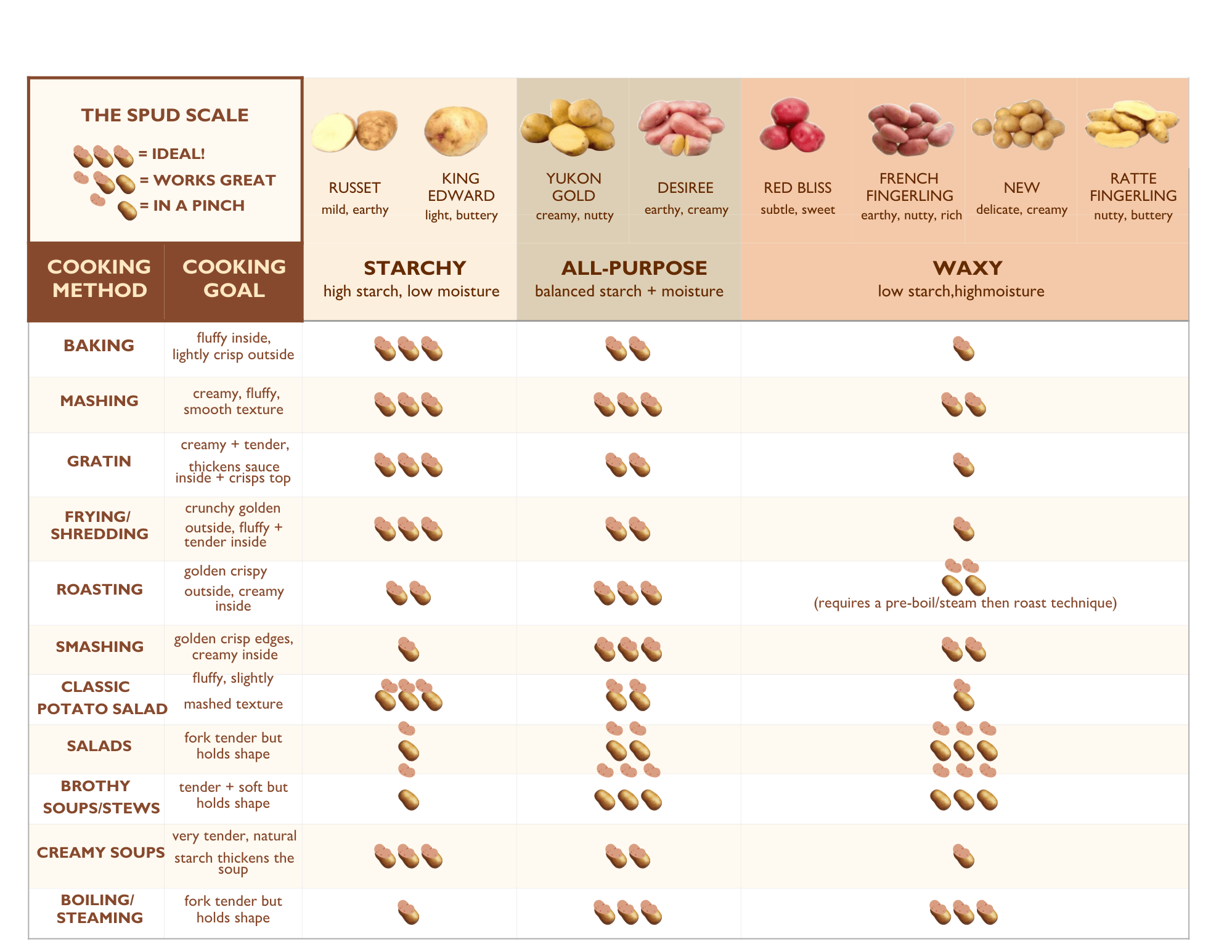
Recipes: Celebrating the Humble Potato
Potatoes are one of the most versatile, affordable, and accessible vegetables—making them perfect for both everyday meals and creative, globally inspired dishes.
To help bring these ideas to life, we’re sharing a growing collection of ACLP recipes that highlight potatoes in nourishing, satisfying ways—from simple roasted preparations to globally inspired stuffed potatoes and vegetable-forward mains.
Globally Inspired Stuffed Potatoes
Turning baked potatoes into complete meals with bold, global flavors:
Potato as a Naturally Gluten-Free Crust
Using smashed potatoes as a hearty, flexible base:
-
Potato Crust Quiche
(Adaptable with seasonal vegetables and different flavor profiles)
Simple, Perfectly Roasted Potatoes
Celebrating the beauty of simplicity with technique-driven flavor:
-
Easy Roasted Potatoes
(With multiple topping and seasoning variations)
If you have favorite potato recipes or ideas you’d love to see, we’d love to hear from you! Write us at [email protected].