
 Deborah deMoulpied
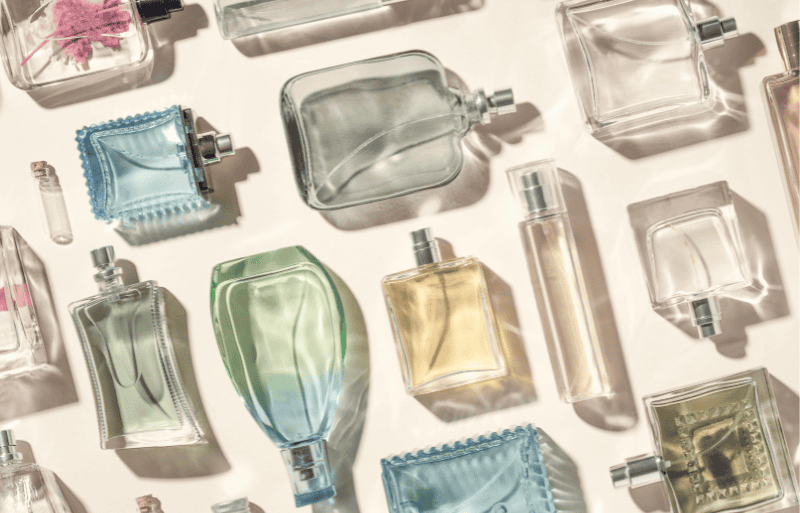
 Ah, fragrance… the word conjures images of dewdrops on flowers, sweet scents on a summer breeze, and the intoxicating pull of essential oils. For thousands of years, humans have used natural fragrances—often from flowers, herbs, spices, oils, and resins—to mask odors and enhance daily life. Ancient Egyptians were using perfumes over 5,000 years ago.
Today, however, most scents in our personal care, cleaning, and even baby products are not from nature. Instead, they’re created in chemical factories using synthetic compounds. In fact, over 3,500 chemicals can be used to make “fragrances” for products like bar soaps, shampoos, laundry detergents, dryer sheets, aftershave, makeup, nail polish, candles, and even garbage bags.
⭐️ FREE GUIDE: Healthiest Fragrance & Essential Oil Brands
What Does “Fragrance” on a Label Actually Mean?
If you’ve ever spotted “fragrance,” “perfume,” or “parfum” on an ingredient list, you might assume it’s harmless—or that it comes from natural sources. But here’s the catch: while the U.S. Food and Drug Administration (FDA) requires personal care products to list ingredients, it makes an exception for fragrance formulas. This loophole—originally designed to protect trade secrets—means companies can hide the specific chemicals they use.
In other words, you have no way of knowing exactly what’s in that scent.
Who Regulates Fragrance Chemicals?
Surprisingly, the fragrance industry regulates itself. In 1973, it formed the International Fragrance Association (IFRA), which created a “Code of Practice” that effectively avoids external regulation. IFRA’s Transparency List includes 3,619 “approved” fragrance ingredients.
Behind the single word “fragrance” on a label, there may be anywhere from 15 to hundreds of these chemicals. Even products labeled “fragrance-free” aren’t always what they seem—testing found that 45% still contained at least one fragrance ingredient. These products may use masking agents, cross-reactive compounds, or even botanicals that can trigger allergic reactions.
And while IFRA calls these ingredients “safe,” safety is a relative, unregulated term. Nearly 200 chemicals on their list are actually banned or restricted in other countries. Plus, these ingredients are assessed individually—we have little data on their combined effects.
Why Fragrance Chemicals Are a Concern
Many IFRA-approved chemicals are linked to serious health risks:
-
Carcinogens like benzene and styrene can increase cancer risk.
-
Endocrine-disrupting chemicals (EDCs), such as phthalates and parabens, can interfere with hormone function. Some EDCs are linked to cancers, particularly breast cancer.
-
Many release volatile organic compounds (VOCs), which reduce indoor air quality and can trigger headaches, respiratory irritation, and nausea.
Fragrance is also a common allergen. In 2007, the American Contact Dermatitis Society named it “Allergen of the Year.” Research shows:
-
34% of Americans experience health problems from fragrance exposure.
-
15% have missed work due to fragrance-related symptoms.
-
20% have left a business because of fragranced products.
Some fragrance ingredients of concern include:
-
Styrene, benzaldehyde, benzyl acetate, ethyl acetate, camphor, methylene chloride, limonene, alpha-pinene, acetone, and acetaldehyde
-
Phthalates (DEP, DEHP, DBP, BBP) – used to make scents last longer and strongly linked to hormone disruption and certain cancers
-
Parabens – commonly used preservatives that may disrupt hormones
Even “natural” scents and essential oils can emit VOCs and cause health effects. One study found their emissions and potential risks can be comparable to synthetic fragrances.
⭐️ FREE GUIDE: Healthiest Fragrance & Essential Oil Brands
How to Reduce Your Exposure
Since you can’t rely solely on product labels or marketing claims, here are six steps to reduce your exposure to harmful fragrance chemicals:
-
Read ingredient lists carefully. Avoid products with “fragrance,” “perfume,” “parfum,” or “fragrance allergens,” especially near the end of the list. Even if “fragrance” isn’t listed, individual fragrance chemicals may be listed by name; the best way to avoid them is to look for credible third-party certifications (see #4).
-
Double-check “fragrance-free” and “unscented” products—they may still contain masking agents.
-
Beware of greenwashing. Terms like “natural,” “clean,” “plant-based,” and “non-toxic” have no legal definition. Look beyond the marketing and read the full ingredients list.
-
Look for credible third-party certifications, such as Made Safe, Ecocert, or EWG Verified.


- Use product safety apps like Yuka, EWG’s Healthy Living, Think Dirty, Clearya, and Detox Me. These can flag fragrance chemicals and lower ratings for incomplete ingredient lists.
-
If using essential oils, choose pure, 100% oils with just one ingredient (often the Latin plant name). Opt for steam-distilled or cold-pressed, certified organic, and packaged in small dark bottles. Avoid synthetic versions of flowers that can’t be made into essential oils (e.g., gardenia, lilac, lily of the valley).
The Bottom Line
Reducing daily exposure to harmful fragrance ingredients—especially phthalates and parabens—can benefit your long-term health. Studies suggest that limiting certain fragranced personal care products can lower cancer-related risks and improve indoor air quality.
The good news? There are plenty of fragrance-free or safer-scented options for personal care and home cleaning. You really can breathe easier.
If you’d like recommendations for perfumes and colognes that skip harmful fragrance chemicals, check out our Guide to the Healthiest Fragrance & Essential Oil Brands.