
 Deborah deMoulpied
 Glyphosate was in the news in 2026 when the Supreme Court sided with Bayer (formerly Monsanto), holding that plaintiffs with cancer cannot sue the company for violating state laws because the container lacked a warning label about cancer risk. States have recently been taking it upon themselves to protect their citizens through additional labels and bans, since the federal government has traditionally been slow to respond to health concerns. The EPA controls labeling, and because it concluded that glyphosate is non-toxic (posing no risk to human health), the Court declared that states may not override this and add labels that say otherwise. This ruling is a gift to Bayer, leaving future generations vulnerable.
So, what is glyphosate anyway?
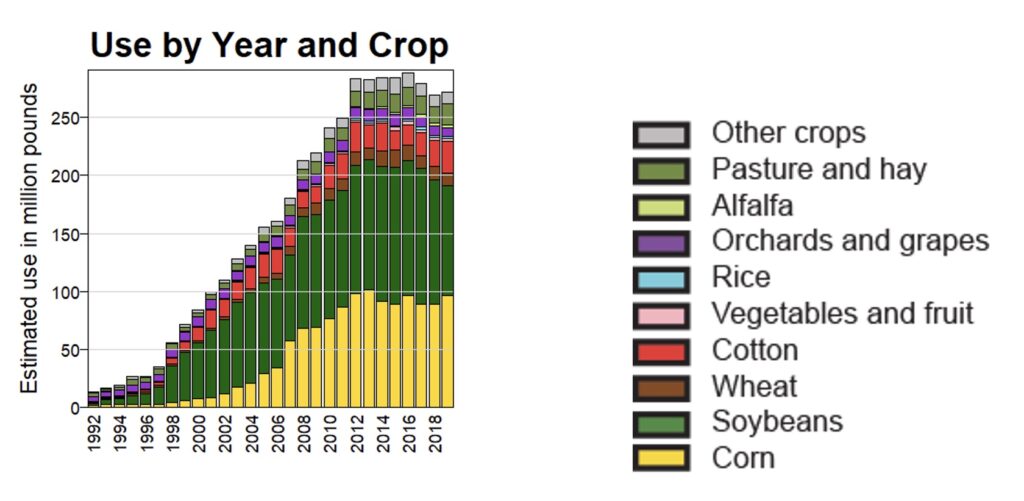
Glyphosate is a systemic herbicide, meaning it is applied to crop leaves and then moves throughout the plant (systemically) and down to the roots, killing the plant. It is the most widely used herbicide in the world (approximately 1.65 billion pounds annually) in agriculture, home gardening, forestry, and for large-scale weed control. It is the main ingredient in the weed killer Roundup. Bayer began releasing new residential (lawn and garden) Roundup formulas without glyphosate in late 2022, which may prove even more problematic. More than 750 products in the U.S. contain glyphosate. Glyphosate is rarely available as a single ingredient, as it is much more effective, and toxic, when combined with other ingredients. That’s a problem.
How “bad” is it?
That depends on who you ask. There is plenty of independent research showing neurotoxicity, and associations with kidney disease, liver disease, endocrine disruption, altered gut microbiome, infant hormone disruption, and cancer. The International Agency for Research on Cancer (IARC), the cancer agency of the World Health Organization (WHO), has classified glyphosate as “probably carcinogenic to humans”. (According to the American Cancer Society, “A probable carcinogen is a substance or exposure that is strongly linked to cancer, but the evidence is not conclusive.”)
However, the EPA (Environmental Protection Agency) asserts that there are “No risks of concern to human health from current uses of glyphosate”. The EPA has a long-standing reputation for being cozy with the chemical industry, particularly Monsanto, and numerous investigative reports have examined those ties.
Legal doesn’t always mean safe. So, while these leading authorities have come to opposite conclusions, the Anticancer Lifestyle Program embraces the Precautionary Principle: Better to be safe than sorry.
When defining “health risk”, we consider how “bad” something is and how much exposure there is in order to determine the final health risk. While glyphosate isn’t as “bad” as other chemicals, our large exposure to glyphosate is where the problem lies – glyphosate is everywhere – in the air, in the rain, and particularly in the food we eat, like cereals, breads, and legumes.
What are the different ways glyphosate is used?
Glyphosate is used in three main ways: direct application to weeds, aerial spraying on genetically modified crops, and crop desiccation.
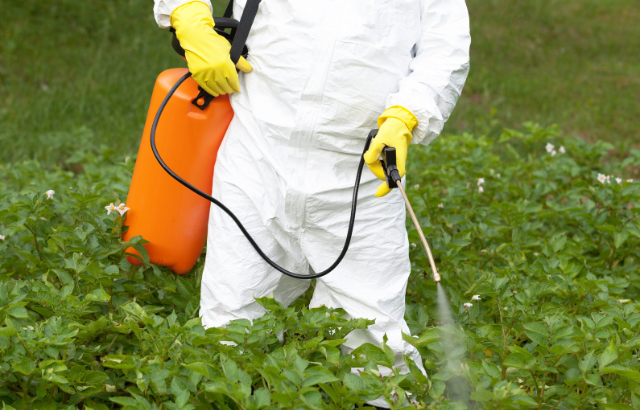
Direct application: We are most familiar with direct application since Roundup is frequently used in home gardening, but the vast majority of its use is in agricultural crops. It is also often applied around trees to make mowing orchards easier. Agriculturally, the biggest problem has been the development of glyphosate-resistant plants, which have created superweeds that require much more frequent applications to achieve the same effect.
Use with GMOs (Genetically modified crops): In 1996, Monsanto created genetically modified (or genetically engineered) soybeans so they would not die from glyphosate application. That way, aerial spraying could kill all the weeds and leave the soybeans to grow. Since then, corn, sugar beets, cotton, and alfalfa have been added to the so-called “Roundup Ready” list. Wheat is currently under development. Over 90% of corn, soybeans, and cotton crops in the U.S. are genetically modified organisms (GMOs) to withstand glyphosate spraying. Keep in mind that corn syrup, extracted from GMO corn and commonly used in ultra-processed foods, is also contaminated with glyphosate. The result is a highly contaminated food system. This includes the food we eat and the feed given to farm animals. Several studies have shown various levels of glyphosate in everyday foods and restaurant meals.
Crop desiccation is the least familiar use of glyphosate. Crop desiccation is the process of killing a crop near harvest time to uniformly dry it, making harvesting more efficient. Roundup (glyphosate) is the most widely used desiccant worldwide. However, Europe did ban glyphosate as a harvest desiccant in 2023.
Some common crops desiccated with glyphosate include wheat, oats, barley, rice, millet, flax, beans, lentils, chickpeas, soybeans, peas, corn, potatoes, sugarcane, and oilseeds such as sunflower, canola, and safflower. Desiccation results in the final food product having the highest residual levels of glyphosate because the residues do not have time to break down before harvest.
Because of these different applications, a large part of our food supply is contaminated with glyphosate and other chemicals, which means our exposure is significant, to say the least. Several organizations have tested a variety of foods to determine whether glyphosate remains in the final product we consume. EWG, the Environmental Working Group, has tested various cereals and children’s foods and found large amounts of glyphosate, particularly in oat products. The non-profit Moms Across America found that 100% of the top 20 fast food brands were positive for glyphosate. (For a deep dive into glyphosate-contaminated foods, check out the Detox Project.) Even the FDA had trouble finding foods that were not contaminated with glyphosate. The Centers for Disease Control (CDC) found that over 80% of people tested positive for glyphosate in their urine. (However, that information is no longer available on the CDC website.)
⭐ Parents of America, please note: the Environmental Working Group (EWG) found glyphosate residue in 26 out of 28 common kids’ cereals, including Cheerios and Quaker Oats.
How to reduce your exposure
Deep breath. Believe it or not, there are some things you CAN do to greatly reduce your exposure.
1 – Eat certified organic as much as possible. Organic farming does not permit glyphosate. However, testing has shown occasionally small levels of residue on organic foods, most likely due to drifting from nearby farms using glyphosate. While a totally organic diet may be impossible or expensive, focus on the foods you eat more frequently and/or prioritize the most contaminated foods – wheat, oats, legumes, corn, soy, and cooking oils. Research showed that eating an organic diet for 7 days reduced urinary glyphosate by 70%.
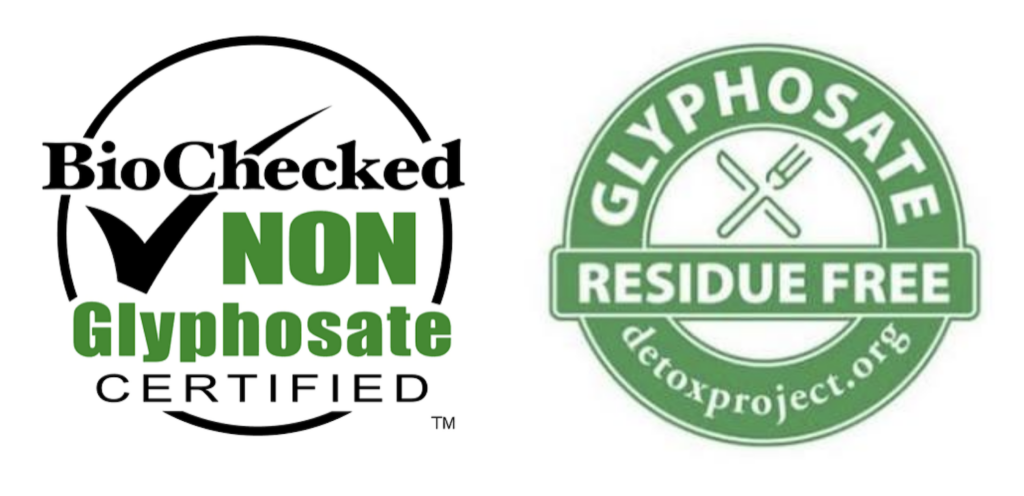
2 – Look for these additional certifications. BioChecked™ Non-Glyphosate Certified™ tests for zero contamination. The Detox Project also has a Glyphosate Residue Free certification that assures residue-free. You often find these on non-organic products.
3 – Cook at home. This gives you more control over the ingredients and food you eat. Avoid processed foods.
4 – Grow your own food and practice safe gardening – don’t use Roundup!
As ever with an Anticancer Lifestyle, simple choices can make a big difference.
Still have questions? Here are the ones we hear most.
Is glyphosate harmful to humans?
The science is split. The World Health Organization’s cancer agency calls it “probably carcinogenic,” while the US EPA says there’s no risk of concern. Research has also tied glyphosate to kidney, liver, hormone, and gut effects. When experts disagree, reducing exposure is the sensible move.
What foods have the most glyphosate?
Wheat, oats, barley, legumes (chickpeas, lentils), corn, soy, and oils like canola and sunflower. Oat cereals and many children’s cereals test especially high, as do breads and other wheat products.
Does eating organic reduce glyphosate?
A lot. Certified organic prohibits glyphosate, and one study found an organic diet cut urinary levels by about 70% in a single week.
Does washing food remove glyphosate?
Not much. Glyphosate is absorbed inside the plant, and doesn’t just sit on the surface, so rinsing barely touches it.
If glyphosate is legal, isn’t it safe?
Not necessarily. “Legal” reflects where the regulatory debate has landed, not settled science, which is exactly why the Precautionary Principle is worth following.
What’s the best way to reduce glyphosate exposure?
Cook at home with whole, organic ingredients and skip the ultra-processed stuff. Look for USDA Certified Organic or “Glyphosate Residue Free” seals when you shop, and avoid using Roundup weed killer in your own yard.
Keep learning with our free resources
Reducing toxic exposures is one of the four pillars of an anticancer lifestyle. When you are ready to dig deeper, these free resources will keep you moving.
- Our 7-Day Environment Kickstart walks you through detoxing your home in 15 minutes a day, from personal care products to the kitchen to indoor air.
- The Environment module of our free Anticancer Lifestyle Online Course goes deeper on safe food storage, cookware, cosmetics, and household products.
- Our on-demand webinars let you listen and learn from clinicians and environmental health experts.
- Our eBooks include The Essential Guide to Tap Water, Detox Your Home, and the Guide to Best Nontoxic Cookware and Kitchen Brands.
- The Environment Toolkit gathers apps, tip sheets, and shopping guides that make the swaps easier.
- Our blog post on microplastics will explore what they are and how to reduce your exposure.
Sources
- Glyphosate in the Air, Occurrence and fate of the herbicide glyphosate and its degradate aminomethylphosphonic acid in the atmosphere
- Effects of Glyphosate on the Nervous System
- Glyphosate and Food
- Glyphosate and Urine
- Glyphosate, Health, and Cancer Risk
- Herbicide Chemical Linked to Cancer Found in Majority of Urine Samples in CDC Study (Note that the CDC study was removed from the website)
- Mapping the key characteristics of carcinogens for glyphosate and its formulations: A systematic review
- Glyphosate: Cancer and Other Health Concerns – Regeneration International
- Effects of glyphosate exposure on human health: Insights from epidemiological and in vitro studies
- American Cancer Society, Known and Probable Human Carcinogens
- Glyphosate impairs collective thermoregulation in bumblebees
- Decades of Deceit: Carey Gillam’s presentation to the European Parliament glyphosate hearing
- A comprehensive analysis of the animal carcinogenicity data for glyphosate from chronic exposure rodent carcinogenicity studies
- Glyphosate Detox: What It Is, Where It Hides in Your Food, and How to Reduce Exposure (2026) Cheat Sheet
- List of Articles by U.S. Right to Know, U.S. Right to Know Investigations