
 Deborah deMoulpied
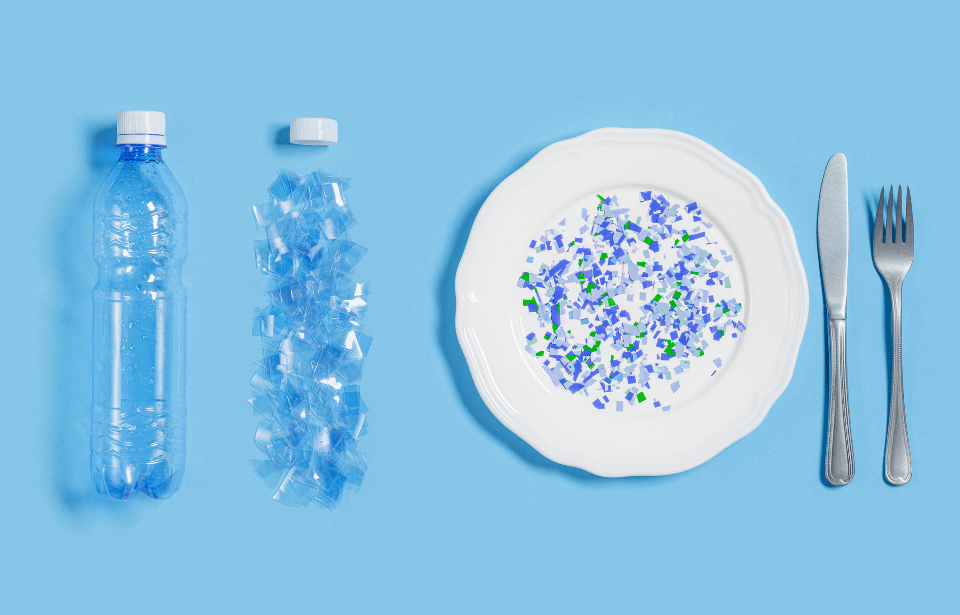
Microplastics and nanoplastics have been all over the news in recent years. We’ve read that they are everywhere in our environment, including our air, water, soil, and food, and in every organ of our bodies. That sounds creepy enough. But before you panic, it helps to understand what these particles are, how they get inside us, why they may be harmful, and, most importantly, what you can actually do about them.
Here’s the short version: the swaps that matter most are to stop heating food in plastic, filter your drinking water, and store food in glass, ceramic, or stainless steel. If you do nothing else, do those three. The rest of this post explains why, and offers more swaps when you’re ready for them.
What exactly are microplastics?
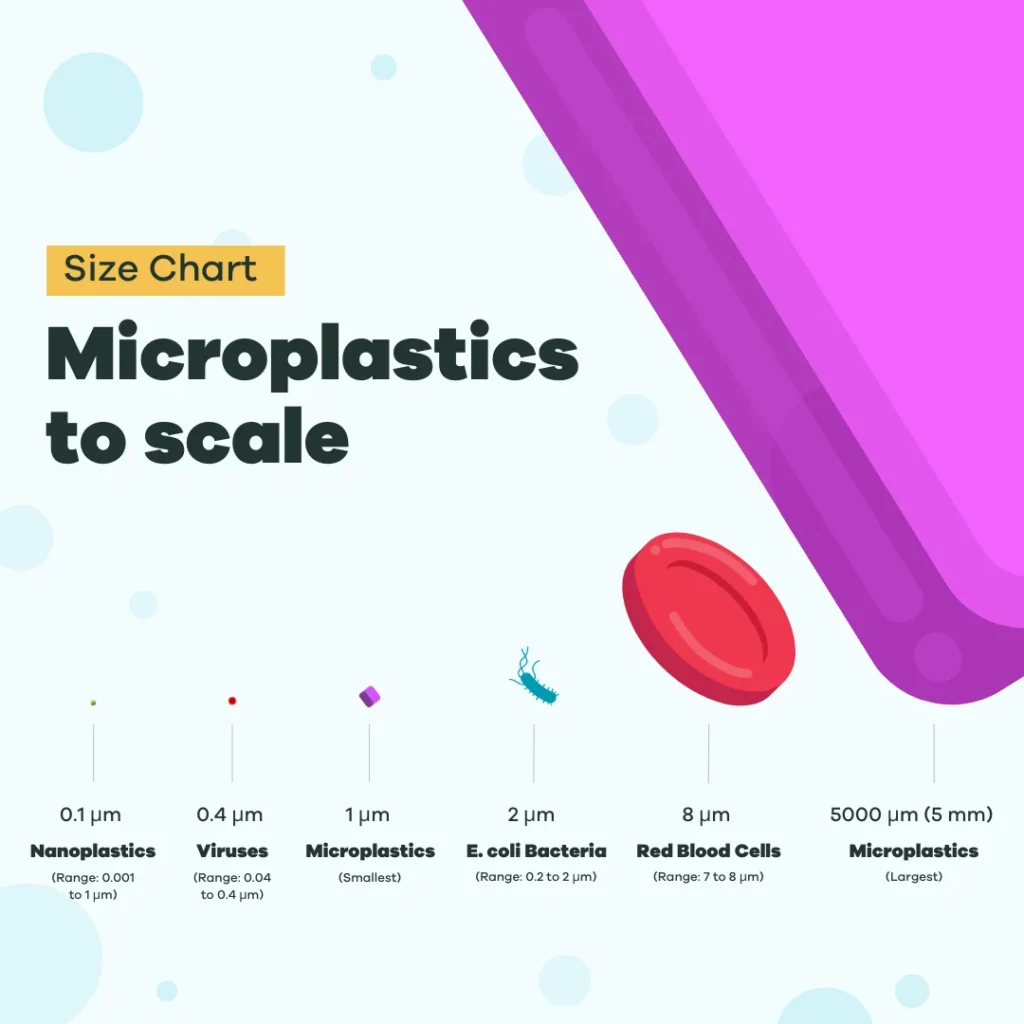
When plastics are subjected to wear, stress, aging, or friction, they don’t biodegrade or dissolve. They break into smaller and smaller bits. Even unscrewing and screwing on a plastic cap creates microplastics. Microplastics are too tiny to see; many are the size of bacteria. Nanoplastics are tinier still, small enough to slip past barriers in the body that stop bigger particles.
These particles come from every plastic source you can think of: bags, furniture, synthetic fabrics, road markings, tires, food containers, beverages, and personal care products. Basically, anything plastic.
How do microplastics get inside us?
They enter the body through our lungs, our gut, and our skin. The larger particles we swallow with food are more likely to pass through and be excreted. The trouble is the smaller ones. Microplastics can be inhaled deep into the lungs, where they can get stuck, causing inflammation and potentially cancer. Scientists aren’t sure how long they stay there.
Nanoplastics are small enough to cross the gut and lung barriers and enter the bloodstream, and the smallest can even penetrate the skin. Plastic particles have now been found in every major human organ, including the brain, placenta, breast milk, testicles, liver, and heart.
How do microplastics harm our health?
These particles can harm us in three main ways.
- They lodge in our tissues. Particles that circulate through the body or settle into its tissues can create inflammation, oxidative stress, and immune problems, a kind of wear and tear on your cells and defenses, and may contribute to cancer. Specific health concerns include cardiovascular disease, vascular damage, high blood pressure, and arthritis.
- They carry other toxins. Pollutants can attach themselves to these particles. As microplastics float through air and water, toxic chemicals collide with them and stick to their surfaces, a process scientists call adsorption. The particles then become carriers for flame retardants, PFAS, volatile organic compounds, and heavy metals and PAHs, delivering extra toxic exposures along with the plastic itself.
- They leach chemicals. Plastic bits leach the same chemicals as the products they broke off from, and because small particles have more surface area for their size, they leach even more. The usual suspects are bisphenols (BPA, BPS, BPF, and their cousins), phthalates, flame retardants, PFAS, and heavy metals. Some of these are endocrine disruptors, meaning they interfere with your hormones; others are associated with cancer and other health problems. One more thing worth knowing: heat speeds up leaching. That is why not heating food in plastic is the single most important habit on this whole page.
How much microplastic are we exposed to?
Some studies suggest we absorb or ingest between thousands and millions of these particles in the course of normal daily life. It’s not hard to see how. One study found over 240,000 plastic particles in a single disposable water bottle.
To be fair, some scientists question the validity of exposure studies, suggesting the measurements may reflect contamination or false positives. Even so, we are unquestionably exposed to thousands of these particles regularly. So the question becomes: what dose makes the poison? We may never know exactly. But with growing evidence associating microplastics with cancer and other diseases, the Anticancer Lifestyle Program embraces the Precautionary Principle: better safe than sorry. A recent editorial in The Lancet Oncology, titled “Microplastics and cancer: a looming threat?”, reached the same conclusion, noting that “applying caution would be wise” given plastics’ potential for harm.
| A special note about silicone and melamine. Silicone is a synthetic polymer similar to plastic. Like plastic, it sheds microparticles, and its safety is in question because it can release compounds called siloxanes that can leach. Melamine is a hard plastic used in sponges and in plates, cups, and utensils, especially for children. It can leach formaldehyde, hormone-disrupting chemicals, and microplastics, and the International Agency for Research on Cancer classifies it as “possibly carcinogenic to humans.” Neither one is the safe upgrade it is often marketed as. |
How to reduce your exposure to microplastics
Avoiding plastic entirely is nearly impossible today, but small, consistent changes add up. Start with simple swaps where you can. Where a full swap isn’t realistic, focus on reaching for that plastic item less often. Frequency matters: the fewer exposures, the lighter the load on your body. Here are swaps to get you started, beginning where they count most.
Swaps in the kitchen
| Not this | Use this instead |
| Heating or microwaving food in plastic | Move food to glass or ceramic first; hand-wash plastics instead of running them through a hot dishwasher |
| Plastic food storage containers | Glass, stainless steel, or ceramic; beeswax wrap |
| Food wrapped in plastic | Fresh, minimally processed, and bulk foods |
| Plastic cutting boards and utensils | Wood or bamboo boards; stainless steel or wood utensils |
| Scratched nonstick cookware | Stainless steel, cast iron, or enamel (our cookware guide can help you choose) |
| Plastic or melamine plates and cups | Stoneware, china, glass, stainless steel, or 100% bamboo (not just “plant-based”) |
| Plastic tea bags | Plastic-free paper bags (check your brand) or loose-leaf tea in a stainless steel strainer |
| Plastic kettles and coffee makers | Stainless steel or glass kettle; French press; stainless percolator or drip machine |
| Plastic coffee pods | Reusable stainless steel pods |
| Plastic blenders | Glass or stainless steel |
| Plastic and paper straws | Stainless steel or glass |
| Canned and boxed foods and drinks | Foods and drinks in glass; fresh, minimally processed foods |
| Filter-feeding shellfish and small whole fish like sardines | Fin fish such as salmon, cod, or trout, ideally from lower-contamination waters (Norway, Iceland, Alaska) |
| Plastic ice cube trays | Stainless steel trays or reusable stainless cubes |
Water and beverages
| Not this | Use this instead |
| Unfiltered tap or well water | Filtered water (look for NSF/ANSI certification; our Tap Water eBook can help) |
| Single-use plastic water bottles | Glass or reusable stainless steel bottles |
| Plastic travel mugs and tumblers | Stainless steel, glass, or ceramic |
| Plastic baby bottles | Glass, or stainless steel with latex nipples |
Bathroom
| Not this | Use this instead |
| Plastic toothbrushes and floss | Natural-bristle brushes; silk or bamboo floss; a water flosser |
| Personal care products with plastic ingredients | Read labels: skip polyethylene, polypropylene, plastic beads, and anything starting with “poly”; choose solid soaps |
| Synthetic pads and liners | 100% cotton products |
| Melamine and plastic foam sponges | Plant-based, biodegradable sponges, Swedish dishcloths, or natural-fiber brushes (and let them dry!) |
Indoor air and dust
| Not this | Use this instead |
| A standard vacuum | A HEPA vacuum rated 99.97% filtration at 0.3 microns |
| Dry dusting and feather dusters | Wet dusting with a damp cotton cloth |
| Stagnant indoor air | A certified three-stage air purifier with activated charcoal (our air purifier post compares options) |
| Shoes on in the house | Shoes off at the door; slippers or socks inside |
Living rooms, bedrooms, and playrooms
| Not this | Use this instead |
| Synthetic carpets, upholstery, and curtains | Natural fibers: wool, cotton, linen, leather |
| Polyester, nylon, acrylic, spandex, and fleece clothing | Cotton, wool, linen, hemp, silk |
| Synthetic sheets and linens | Cotton, linen, silk, hemp |
| Synthetic toys, stuffed animals, and pacifiers | Wood, cotton, wool, linen, natural latex |
Change is not always easy, and nobody swaps out a whole household in a weekend. Research confirms that simple swaps like these measurably reduce the plastic particles found in the body. Pick one or two of the high-impact changes, make them habits, and come back for more when you’re ready. It’s better for you, better for the environment, and a lot less creepy.
Microplastics FAQ
Do water filters remove microplastics?
Many do. Look for filters with NSF/ANSI certification, and check what each model is certified to remove. Our Tap Water eBook walks you through choosing one for your home.
Is silicone safer than plastic?
Somewhat, but it isn’t a free pass. Silicone sheds microparticles and can leach compounds called siloxanes, so for cooking and food storage, glass, ceramic, and stainless steel are the safer choices.
Do I need to give up plastic completely?
No, and you couldn’t if you tried. Focus on the swaps that cut your biggest, most frequent exposures, especially anything involving heat, food, and drinking water.
Keep learning with our free resources
Reducing toxic exposures is one of the four pillars of an anticancer lifestyle. When you are ready to go beyond microplastics, these free resources will keep you moving.
- Our 7-Day Environment Kickstart walks you through detoxing your home in 15 minutes a day, from personal care products to the kitchen to indoor air.
- The Environment module of our free Anticancer Lifestyle Online Course goes deeper on safe food storage, cookware, cosmetics, and household products.
- Our on-demand webinars let you listen and learn from clinicians and environmental health experts.
- Our eBooks include The Essential Guide to Tap Water, Detox Your Home, and the Guide to Best Nontoxic Cookware and Kitchen Brands.
- The Environment Toolkit gathers apps, tip sheets, and shopping guides that make the swaps easier.